

Plant Care Articles


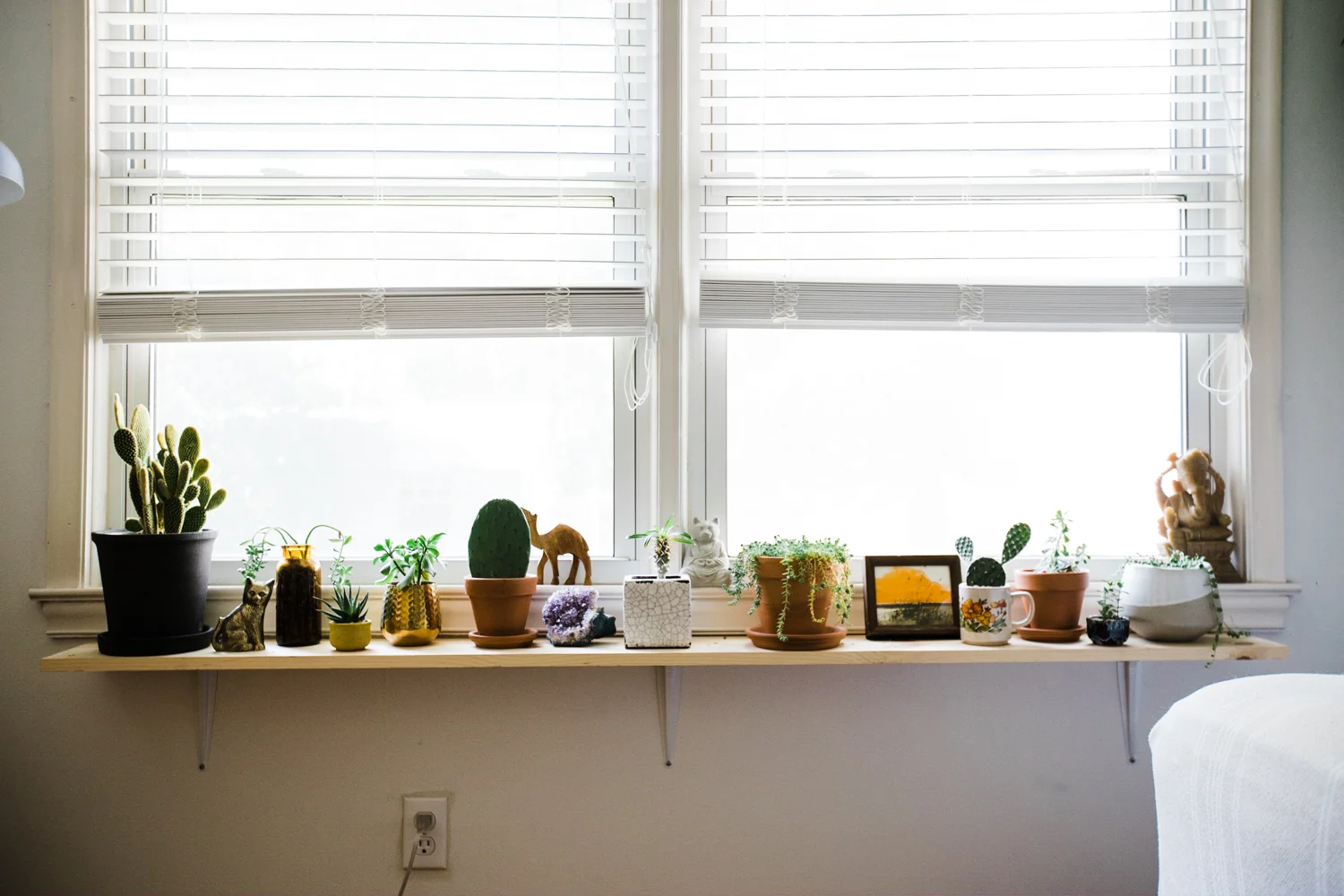
You can build shelves over your windows for plants to sit on. We call them plant shelves, and they are wonderful!


We lay out tips for how to best propagate succulents. Propagating succulents can be easy and fun!

We share tips for creating a potting station at home to make caring for plants easy and fun.

We are often asked just exactly how to water an air-plant, so we made a video. Read about air-plant care, especially watering them and see the technique for yourself.

We share tips for how to best care for your succulents this spring. Tips include watering needs, acclimating them to the outdoors, and trimming them in the springtime.

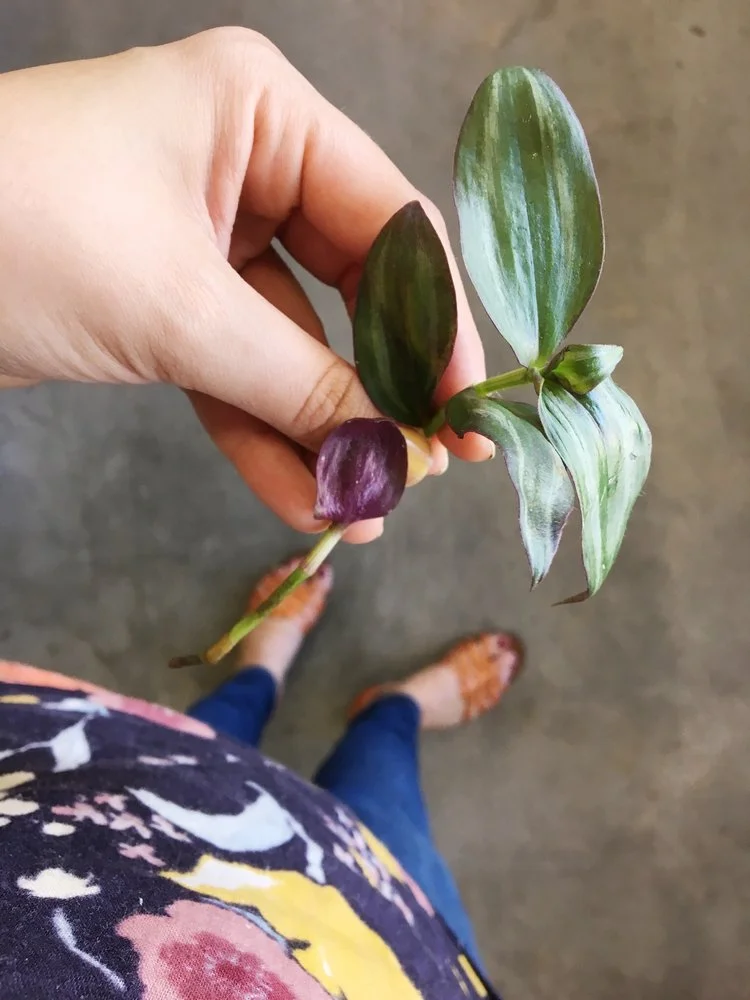
How to Propagate Purple Heart, aka Inch Plant
Someone told me recently that the way you keep a plant forever is to propagate it. This concept blew my mind. I thought you just kept the plant forever, watering it some. Picking off dead leaves. Not so. And now I forgive myself for the plants I couldn't keep going on my failed life-support plans.
Hanging basket plants like this purple heart here (photo below), they need to be regenerated too. His head will get all scraggly with aging growth that can't quite get enough light. It's not all my fault that it looks worn. The lasting life of a plant is a topic for continued discussion, but for now, let's talk about propagating Purple Heart, also known as Inch Plant.

One of the best things about air-plants is their display versatility! That's right, we said their display versatility. As in, because these plants survive on air, water, and sunlight only and do not require soil, you don't have to put them in a pot! Whaaaat? It's mind-blowing, for sure.
Not requiring soil and a pot make air-plants way cool because you can get creative with how you display them in your home. Rocks, jars, driftwood! The possibilities are endless!

How to Care for your Fiddle Leaf Fig Tree
The Fiddle Leaf Fig Tree may just be the most internet famous tree. You're pretty much not a design blog if you don't have at least one image of a fiddle leaf on your blog. SO, consider this the official start to our blog. Thank God, we are finally legit.
I bought this tree about two and a half years ago when I was nearing the end of my pregnancy with Harriet. I was freaking excited. I'd heard they are finicky about light and that they hate being moved around, so I was also stinking nervous. I figured I was about to step up to keeping another human alive, I was definitely up for the challenge of a tree. Meh.

Becoming a plant lady
If you can't tell from all my instagram stories about plants, I am on a journey to become a green thumb. I'm trying to document this path for all my fellow dreamers out there. When #jungalowstyle is ever in our faces, and when NASA recommends at least one air-purifying plant per 100 square feet of our homes, I want to be that person offering a nod to the cold hard truth of plant care–it ain't always easy and it's not just about watering them.
I have a secret weapon lovingly nicknamed "Succulent Sara." While she's best known for growing our fabulous and beloved succulents, her past life includes managing a large nursery with all types of plants. It's in her heart and in her soul, and she's my friend. I am not afraid to ask her all sorts of inane questions about the plants I am harboring up at Retro Den.

Aeoniums are succulents
Aeoniums (pronounced ee-oniums, the A is silent) are a type of succulent with a lovely rosette shape. They are freakin' gorgeous. Although aeoniums are considered succulents, they require different care than most other succulents. As such, we've created a special guide just for these beauties.

Our succulent expert and dear friend Sara says succulents are the camels of the plant world–draught tolerant, wind tolerant, the toughest plants you'll find. Tough as nails on the outside, hearts of gold on the inside. Though these plants are as resilient as camels, proper treatment is still necessary.
I remember before meeting Sara I'd buy a cactus at some random store, plant it in soil (a big no no, read our planting guide here), place it in the middle of the room with minimal light (How could you, Ashley?), and water it whenever it looked sad (that is wrong too, check out our basic care tips here). So if you are treating your succulents like this, don't worry. I was once where you are. Just having a love of the plant and a motivation to learn is all it takes.

You may have noticed, we love house plants. We love them for the energy, color and life they bring into our spaces. Whether styling rooms in our own homes or a scene at the shop, there's always a house plant involved. Although we have great love for house plants, we understand that sometimes keeping them alive can be stressful. We've all got busy lives, right? Who wants to be stressed out by a house plant? That's why we've put together our top three favorite house plants that keep you company, but don't take your time.

Yuccas are attractive, architectural trees that can make a big statement in your space. Below we've summarized basic care and repotting tips from our plant expert, Sara.
Basic Care
Give your yucca tree morning sun to shade and about a gallon of water every other week. If you are keeping it outside, bring it in when the temperature drops to 40 degrees.

Succulents in these teeny tiny terracotta pots are some of our shop favorites. Succulent Sara and her cousin Pat are constantly potting these babies to keep up with demand. Who could blame you all for wanting these? They're so cute!
One question we often get asked is, "how long can they live in this tiny pot?" The answer is, however long you want them to!
Succulents are like goldfish–they only get as big as their pot, and you don't ever have to transplant them to a bigger pot unless you want to. That said, your little guys may need some maintenance after living with you for a year or two.
Follow the steps below to keep your baby succulent happily living in its tiny pot year after year.

One hot summer afternoon, a worried customer brought in a succulent (pictured below) with hopes of a diagnosis and treatment plan. We Ashleys were happy to oblige and showed her to the Plant Bar.
The Symptoms: Some leaves appeared rubbery, yellowish brown, and were starting to fall off. Note that it's normal for a succulent's lower leaves to shrivel and fall off as it grows; however, this rubbery look was not consistent with normal leaf shedding.
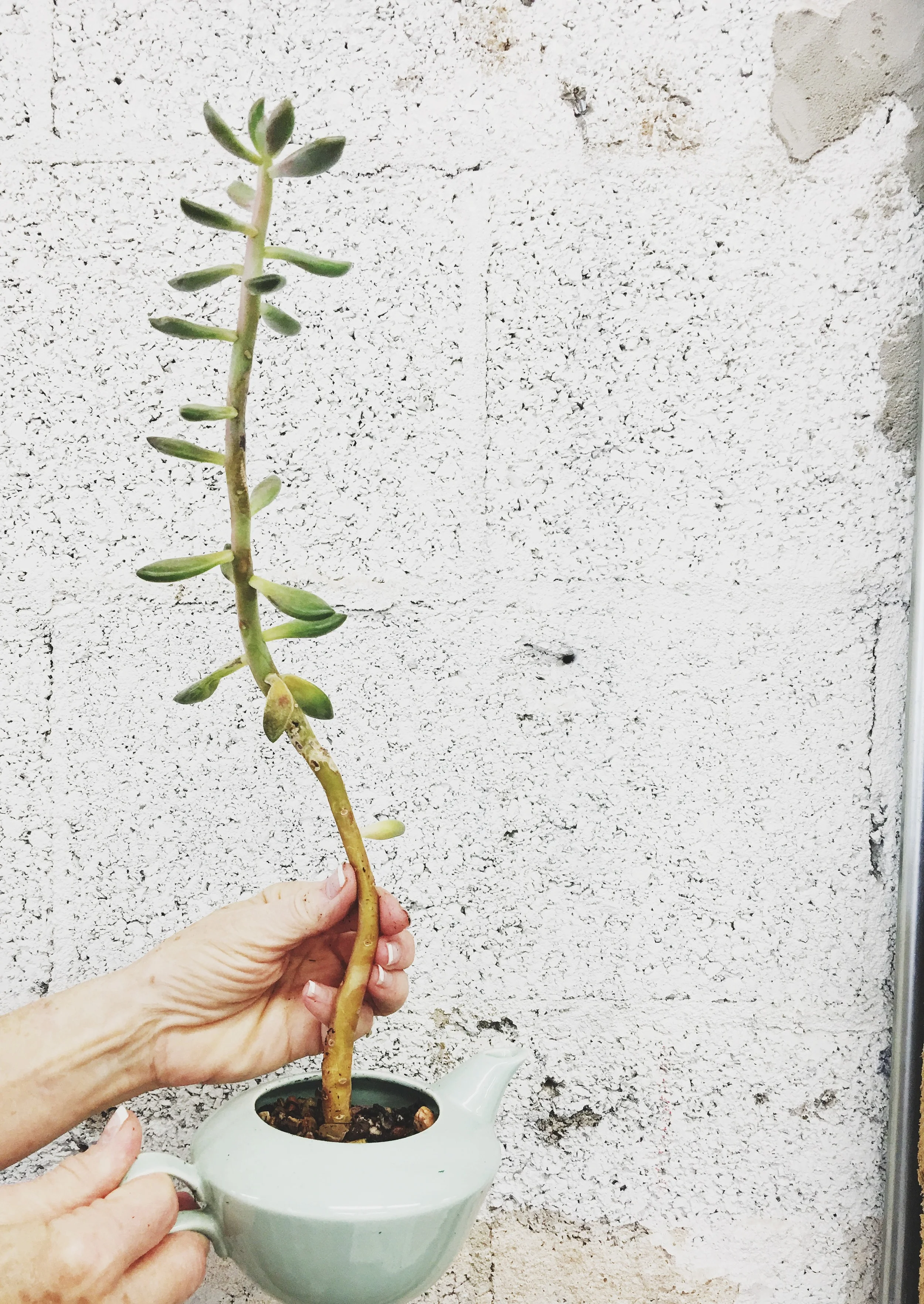
Are you depressed because the succulent your friend gave you two years ago looks like this? That's what our friend Kathy told us when she brought this guy in. Never fear, we (and by we, I mean Sara) can help!
First, Sara diagnosed Kathy's succulent as being generally healthy, but may have suffered from some frost bite in the past (darker areas on the stalk). Also, it could use some more light as the stem looks a bit stretched with the leaves farther apart than normal. Other than that, Kathy has done a great job as a succulent owner over the past two years.

Oh hey
Succulents are known for their low water needs, but there are a few instances where you may need to water more often than typically recommended.
- If you own any of these more spindly succulents pictured, they may need a little more water than plumper varieties. They don't have the capacity to store water as well as some of the other succulents. If your thinner succulent seems dry or distressed, try giving it a smaller amount of water more often, even once a week.
- If you have purchased the tiny potted succulents from our shop, they need more regular watering due to the container, which is small and allows quick evaporation. Give these guys two tablespoons of water once a week.
- Christmas Cacti have special needs to achieve optimal blooming. We've got a whole post on this topic.